ServicesHardscape Installation
Hardscape Installation in Lake Buena Vista
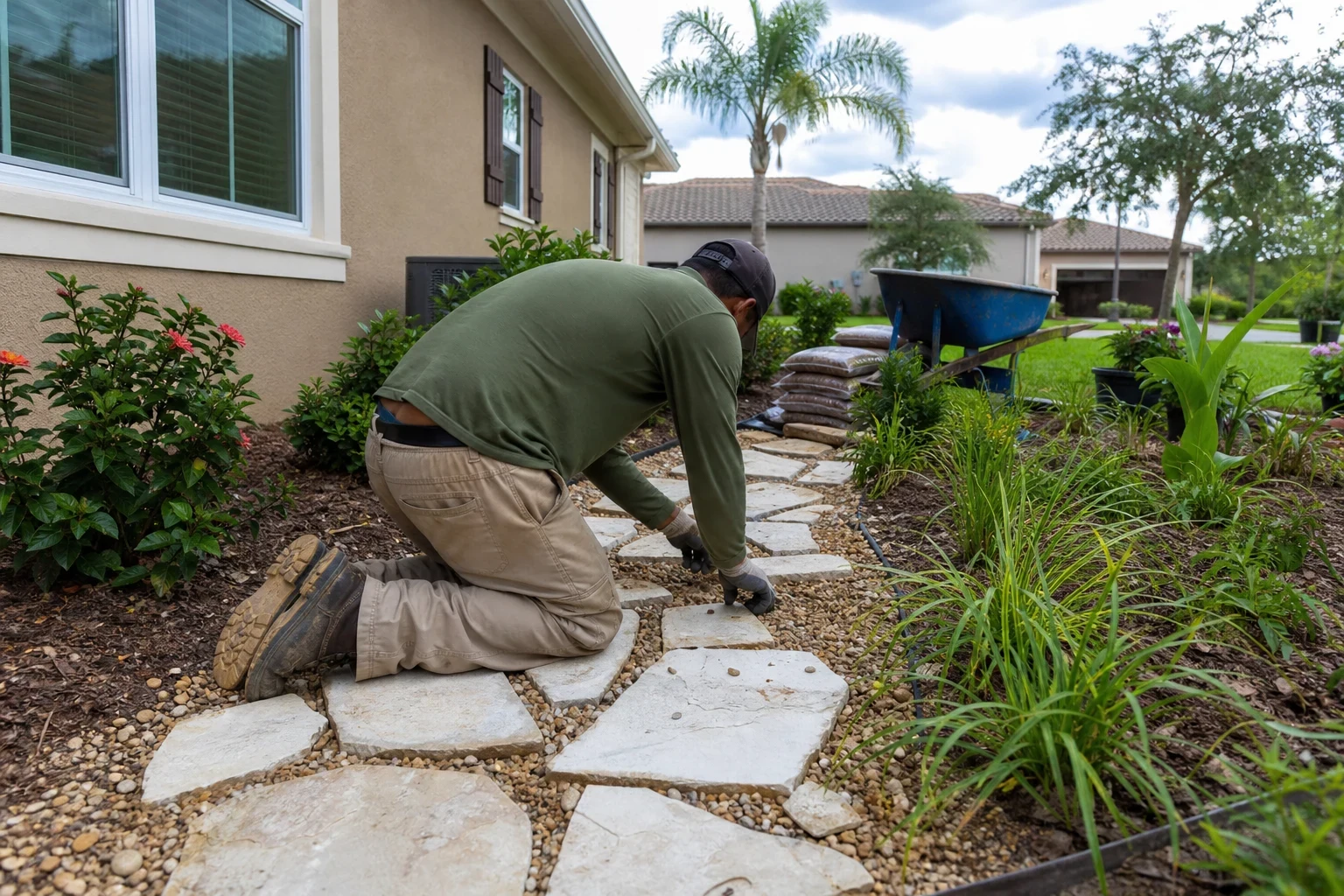
We build paver patios, walkways, driveway borders and low garden walls that stay flat and drain the right way. Before you pick a material, we walk your yard with you and explain what each option means for cost, comfort and upkeep.
What hardscaping is and when it makes sense
Hardscaping is the built part of your yard: patios, paths, steps, seat walls, fire pit pads and edging. It turns a patch of thin grass or a muddy shortcut into space you can actually use, and it cuts down on the mowing and watering that part of the yard used to need.
Most problems with pavers have nothing to do with the stones themselves. They come from what is underneath. Our sandy soil drains fast but shifts easily, and summer downpours will find any low spot. So we spend most of our effort on excavation, base rock and compaction, then set a slight slope that carries water away from your home.
We are a family-owned company, business licensed and fully insured, and we treat your yard the way we would want our own handled.
What a hardscape job includes
- Layout and slope planning
- We mark the shape with paint or stakes so you can see it in place. We also plan a gentle fall away from your foundation so rain does not pool against the house.
- Excavation and base
- We dig out the soil, lay crushed base rock in layers and compact each one with a plate compactor. A thin bed of sand goes on top so the pavers sit level.
- Material choices explained
- Concrete pavers are budget friendly and come in many colors. Travertine stays cooler underfoot around a pool. Natural stone and larger format slabs cost more but give a cleaner look. We show samples and tell you plainly how each one wears.
- Edge restraints and joint sand
- Edging along the outside keeps pavers from creeping outward over time. We sweep polymeric sand into the joints, which firms up and helps keep weeds and ants out.
- Walls, steps and borders
- Low seat walls, planter borders and steps are built with a footing and drainage gravel behind them. Taller retaining walls can need a permit, and we check that before we start.
Signs your yard could use hardscaping
A worn path through the grass
If everyone walks the same line to the side gate or the pool, the grass there will never recover. A walkway gives that traffic somewhere to go.
Puddles that sit after every storm
Standing water near your patio or door often means the ground slopes the wrong way. Regrading and a properly pitched surface can fix it.
Pavers that rock or sink
Loose or sunken pavers usually point to a thin or uncompacted base. We can tell you whether resetting the area will work or whether it needs to be rebuilt.
Cracked slab patio
An old poured slab that has cracked and heaved can often be removed and replaced with pavers, which flex and can be repaired one piece at a time.
Outdoor space you never use
A small slab outside the back door rarely fits a table and chairs. Extending it gives you room to actually sit outside in the cooler months.
What moves the price of hardscaping
Every yard is different, so we price after we have seen yours. The estimate breaks out materials, labor, base work and any removal so you can see where the money goes. For larger projects, you can spread the cost out: we offer financing of up to $100,000, repaid over anywhere from two to twelve years, and paying it off early never costs you a penalty.
Size and shape
Square footage matters most. Curves and lots of corners add cutting time and waste.
Material
Concrete pavers, travertine and natural stone sit at different price points. Pattern matters too, since a herringbone takes longer to lay than a simple running bond.
What has to come out first
Removing an old slab, roots or a failing paver area adds labor and hauling.
Access and grade
Tight side yards slow down equipment. Sloped ground can need extra base, steps or a short wall.
Walls and extras
Seat walls, fire pit pads, steps and permit work each add to the total, and we price them as separate lines.
How your project runs
- 1
Walkthrough and estimate
We visit your home, measure the area, check drainage and talk through how you want to use the space. You get a written estimate that lists each part of the job.
- 2
Approvals and scheduling
If your community has an HOA, we provide the drawings and material details they usually ask for. We check permit needs for walls and larger work, then set a start date.
- 3
Dig, base and compact
This is the longest part of most jobs. We protect your lawn and beds where equipment travels and haul the excavated soil away.
- 4
Set, cut and finish
We lay the pattern, cut the edges clean, install restraints and sweep in the joint sand. Before we leave, we walk the finished work with you and clean up the site.
Hardscape questions we hear often
Should I choose pavers or poured concrete?
Poured concrete usually costs less up front, but it tends to crack as the ground moves, and repairs show. Pavers flex with the soil and a damaged section can be lifted and reset. We walk you through both so you can weigh cost against long-term upkeep.
Will the patio get too hot to walk on?
Dark pavers can get very hot in summer sun. Lighter colors and travertine stay noticeably cooler, which is why many people choose them around pools. We bring samples so you can compare.
Do I need a permit or HOA approval?
A simple patio or walkway often needs no permit, but taller retaining walls and some other work can. Many communities have an HOA that wants to see plans first. We check both and help you with the paperwork.
How long does installation take?
A typical patio or walkway takes a few days once work begins, depending on size and weather. Heavy rain can pause digging and compaction, and we will keep you posted if the schedule shifts.
How do I take care of pavers afterward?
Keep the joints full and pull any weeds while they are small. Sealing is optional; it can deepen color and resist stains, and we explain the pros and cons before you decide.
See what your yard could look like
We will walk your property, explain your material options in plain terms and leave you with a written estimate. There is no cost for the visit.