ServicesIrrigation
Irrigation and Sprinkler Repair in Lake Buena Vista
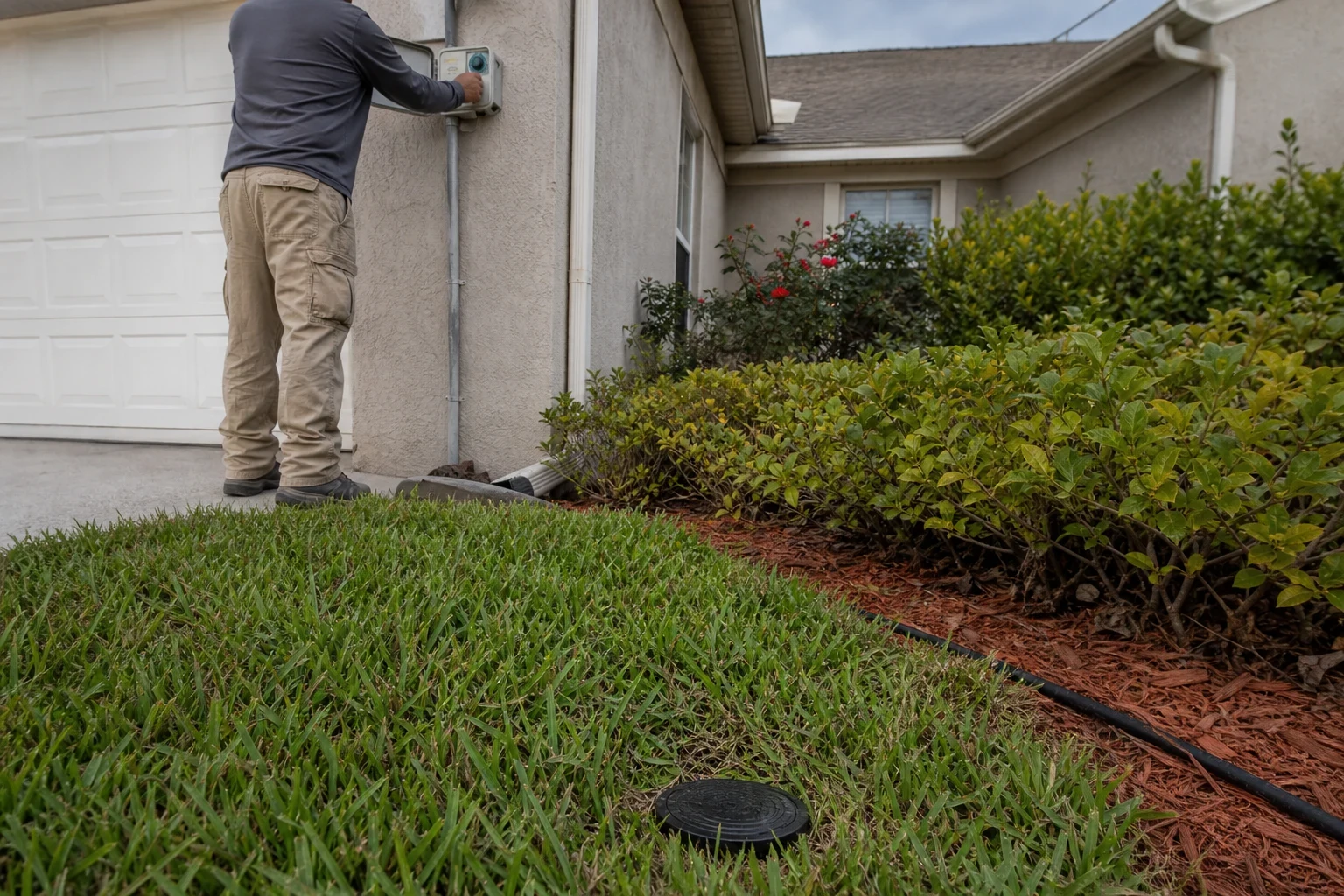
We repair, adjust and install sprinkler systems so your lawn and beds get the water they need and no more. Before we touch a valve, we walk your yard with you and explain what each zone is doing, what is wrong and what your options are.
What irrigation work actually covers
Most sprinkler trouble comes down to a few parts: the heads, the valves, the controller and the pipe that connects them. When one fails, you see it as a brown patch, a soggy corner or a water bill that jumped for no clear reason. Our job is to find which part is responsible and tell you, in plain terms, what fixing it involves.
Sandy soil drains fast here, so water that lands in the wrong spot is simply lost. A well-set system gives turf one amount and shrub beds another, runs in the early morning and skips cycles after a good rain. That is what we aim to leave you with, whether the fix is one cracked head or a new zone for a bed you just planted.
We are a family-owned business, licensed and fully insured, and sprinkler work is a regular part of what we do at your home, not something we squeeze in on the side.
What our irrigation service includes
- Zone-by-zone system check
- We run every zone and watch it work. We note heads that are tilted, sunk, clogged or spraying the driveway, and we check pressure where the spray looks weak or misty.
- Head and nozzle repair
- Broken rotors and spray heads get replaced with matching parts. Mixing head types on one zone is a common cause of uneven watering, so we show you why matching matters before we swap anything.
- Valve, wire and leak repair
- A zone that will not turn on, or one that will not shut off, usually points to a worn valve diaphragm, a failed solenoid or a cut wire. We track down the cause, dig only where we need to and repair the line or valve.
- Controller and rain sensor setup
- We set run times by zone and by season, then show you how to change them yourself. Florida requires a rain sensor or similar shutoff on automatic systems, and we check that yours actually works.
- New zones and drip lines
- When you add beds or new grass, we can extend the system or run drip line to shrubs so they get slow, direct water instead of overspray. This pairs well with our sod installation and mulch and beds work.
- New system installation
- For yards with no system, or one that is past saving, we lay out zones by sun, plant type and slope, then install pipe, valves, heads and a controller.
Signs your sprinklers need a look
Brown patches in a watered lawn
If one area stays dry while the rest is green, a head is likely blocked, broken or knocked out of line. It can also mean the spacing never covered that spot to begin with.
Puddles and soggy spots
Standing water after a cycle, or ground that squishes days later, often means a leaking pipe or a valve that is not closing all the way.
A water bill that keeps climbing
A hidden leak or a controller set to summer times all year can quietly double how much you use. It is one of the first things we check.
Spray on the house or street
Water hitting walls, windows or pavement is wasted, and constant wetting can stain surfaces. Usually a nozzle change or adjustment fixes it.
Fungus or thin, weak grass
Too much water invites fungus and shallow roots, especially in St. Augustine. Cutting run times often helps more than any treatment.
A zone that will not start or stop
This is almost always a valve, wiring or controller issue, and it is worth fixing before a stuck zone floods a bed.
What affects the cost of irrigation work
Sprinkler repairs range from a quick nozzle swap to tracing a leak under a driveway, so we price after we have seen the system run. Your estimate shows each item separately, and we go over any line you have questions about.
Number of zones and yard size
More zones mean more heads, valves and testing time, whether we are repairing or installing.
What is hiding underground
A broken head is easy to see. A slow leak or a cut wire takes longer to find, and that search time is part of the cost.
Age and brand of the system
Some older parts are no longer made, which can mean replacing a whole valve or controller instead of one small piece.
Access around pavers and roots
Pipe running under walkways, patios or mature tree roots takes more care and labor to reach and repair.
Scope of new work
Drip versus spray, the type of controller and how many beds need water all shape the price of a new zone or full install.
How an irrigation visit goes
- 1
A free walkthrough together
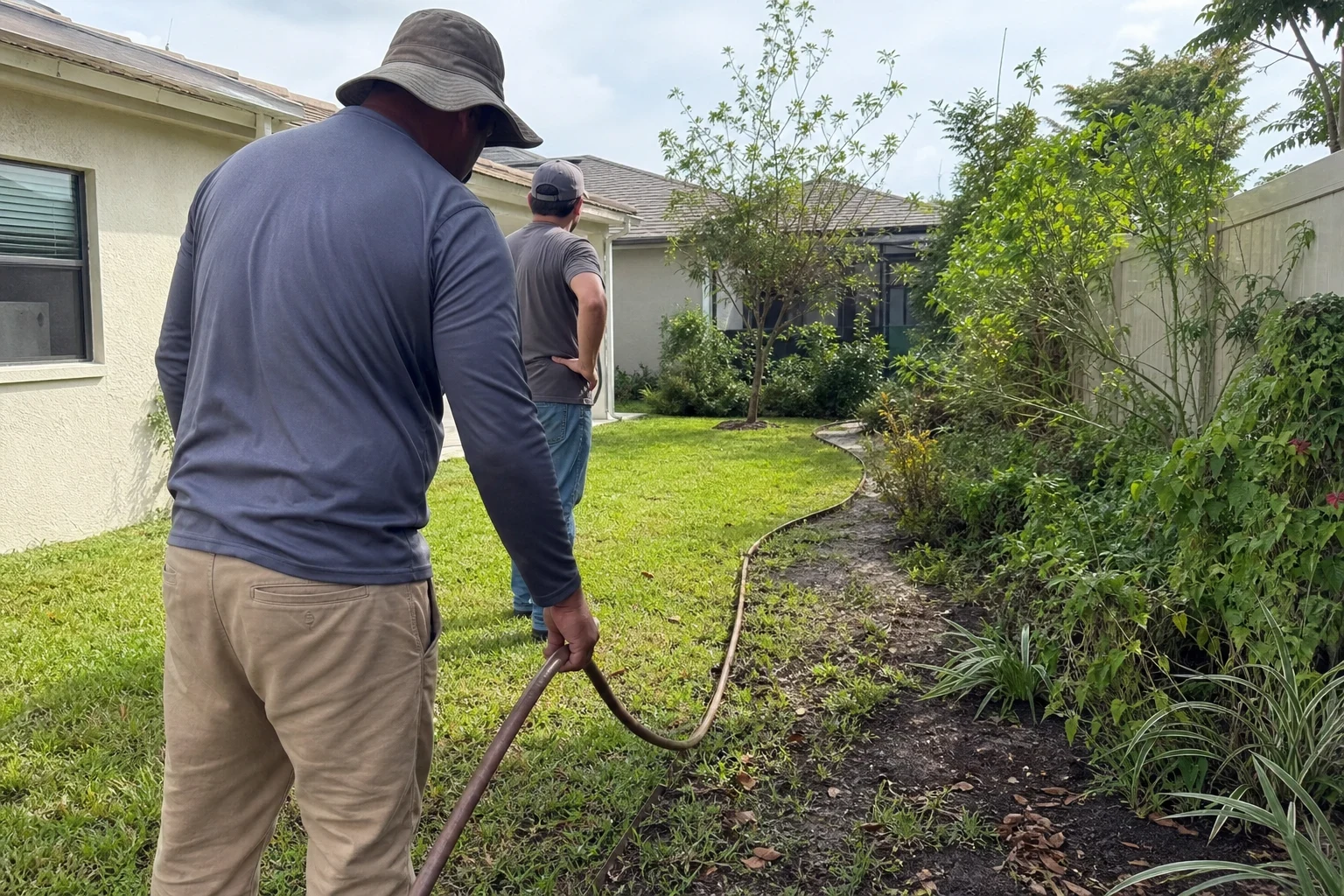
We meet you at your home, run each zone and point out what we see as we go. You are welcome to ask anything, and we will show you where your valves and controller are if you are not sure.
- 2
Your options, clearly written
You get a free estimate with each repair listed on its own line. If an older system would cost more to keep patching than to replace, we tell you that honestly and explain both paths.
- 3
The repair day
We mark the lines, cut sod back neatly where we have to dig and set it back in place when we are done. Every repaired zone gets tested before we pack up.
- 4
Settings and a quick lesson
We program the controller for the season and your watering days, confirm the rain sensor responds and walk you through how to adjust it later.
Irrigation questions we hear often
How many days a week should my sprinklers run?
Fewer, longer cycles usually do better than a short run every day, because water that soaks in deeper pulls roots down with it. The right schedule shifts with the time of year, your grass type and how fast your soil drains. Local watering rules decide which days you may run, so we set your controller around those. In the wet summer months, a rain sensor that works will cancel plenty of cycles on its own.
Is it worth repairing an older system?
Often it is, if the pipe is sound and the problems are heads, nozzles or a valve or two. When we see repeated leaks, cracked pipe or discontinued parts throughout, replacing may cost less over time. We lay out both options and let you decide.
Will you tear up my lawn?
No. We dig small, targeted holes where the problem is, set the sod aside and put it back when the repair is finished. A full install involves trenching, but the lines are narrow and the grass fills back in.
Do I need a smart controller?
Not necessarily. A smart controller adjusts to weather and can save water, but a standard controller set correctly with a working rain sensor does the job well for many homes. We explain the difference and recommend whichever fits how you want to manage it.
Can I finance a new irrigation system?
Yes. Our financing reaches up to $100,000, with 2–12-year terms and no prepayment penalties, so paying it off early never costs you extra. Bring it up during your walkthrough and we will go through the monthly side right next to your estimate.
What does the walkthrough cost?
Nothing. The on-site walkthrough and the estimate are both free, and there is no obligation to book the work.
Let's see what your sprinklers are really doing
We will run every zone with you, explain what we find and give you a free estimate you can read line by line. Then you decide what makes sense for your yard.