ServicesTree Trimming and Removal
Tree Trimming and Removal in Lake Buena Vista
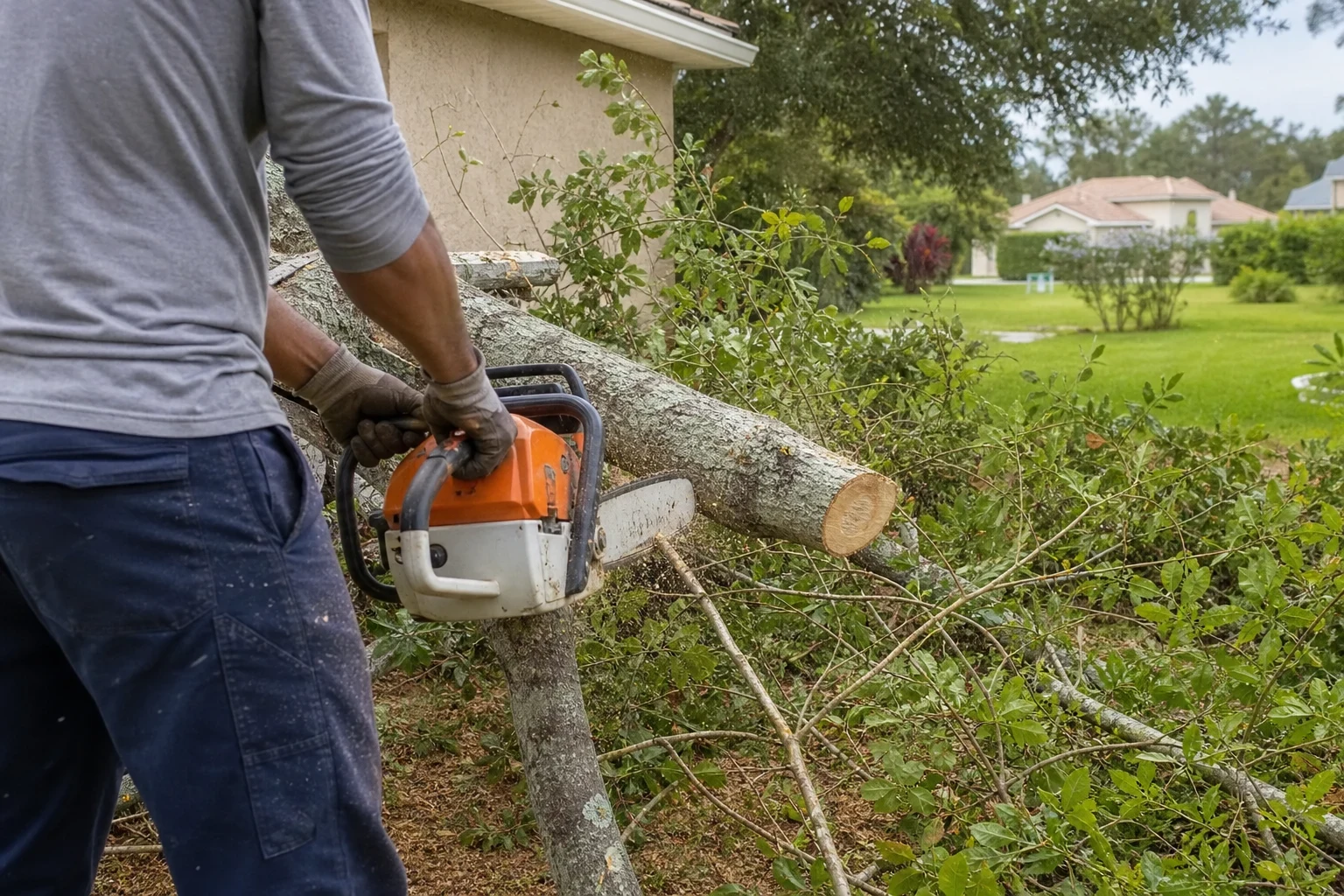
We prune trees so they stay healthy, clear your roof and stand up better to summer storms. When a tree has to come down, we remove it in controlled sections. Before any cut, we walk your yard with you and explain what we see.
Trimming or Removal: Knowing Which One You Need
Most trees don't need to come down. They need the right cuts. Good pruning removes dead and crossing branches, opens the canopy so wind passes through, and lifts limbs off your roof and driveway. Bad pruning, like topping a tree or stripping its inner branches, leaves it weaker and more likely to drop limbs later. We don't do either.
Removal makes sense when a tree is dead, has serious rot in the trunk, leans toward your home with lifting roots, or was simply planted too close to the house. Laurel oaks are a common example around here. They grow fast, then often hollow out from the inside long before they look sick.
We're a family-owned company, business licensed and fully insured, so a crew working near your roof and fences is covered. We'll tell you plainly whether a tree can be saved and what each option means for its health and your budget.
What Our Tree Work Includes
- Deadwood removal
- Dead branches are the first to fall in a storm. We take them out cleanly at the branch collar, which lets the tree seal the wound on its own.
- Crown thinning
- We remove select interior branches so light and wind can move through the canopy. The tree keeps its natural shape and catches less wind.
- Crown raising and clearance
- We lift low limbs over walkways, driveways and lawns, and cut back branches touching your roof or screen enclosure. That keeps leaves off the roof and squirrels off the eaves.
- Sectional tree removal
- Where there's no room to drop a tree whole, we take it down piece by piece and lower heavy sections with ropes. Your roof, fence and plantings stay out of the way.
- Cleanup and haul-away
- We chip branches, rake the area and haul off the debris. If you'd like the stump gone too, our stump grinding service can follow the removal.
Signs a Tree Needs Attention
Branches on your roof
Limbs rubbing shingles or hanging over the house can scrape the roof in wind and drop debris that holds moisture.
Mushrooms or soft spots at the base
Fungus growing at the trunk or roots usually means decay inside. It's worth a look before the next storm season.
Cracks, splits or hollow sounds
A deep crack where two big trunks meet, or a trunk that sounds hollow when tapped, points to a weak structure that may not hold.
Bare branches in one section
If part of the canopy stays leafless while the rest is green, that section is likely dead and should come out.
A new lean or lifting soil
Trees in sandy soil can shift after heavy rain. A lean that wasn't there before, with soil heaving on one side, needs attention soon.
Too much shade on the lawn
Thin, patchy grass under a dense canopy often recovers once we thin and raise the tree to let light reach the ground.
What Affects the Cost of Tree Work
Every tree is priced on its own, after we've seen it. The biggest drivers are size, how hard it is to reach and how much risk sits underneath it. Larger projects can be financed for up to $100,000, repaid over 2 to 12 years, and paying it off early never costs you a penalty.
Height and canopy spread
A large live oak takes far more climbing time and debris handling than a young ornamental tree.
Access and what's below
Trees over a roof, pool cage or power line must be lowered in sections, which takes more rigging and time than an open drop.
Tree condition
Decayed or dead wood is less predictable to climb and cut, so it calls for extra care.
Debris and stump
Hauling everything away, keeping firewood on site or adding stump grinding all change the scope.
How a Tree Job Goes
- 1
Free walkthrough
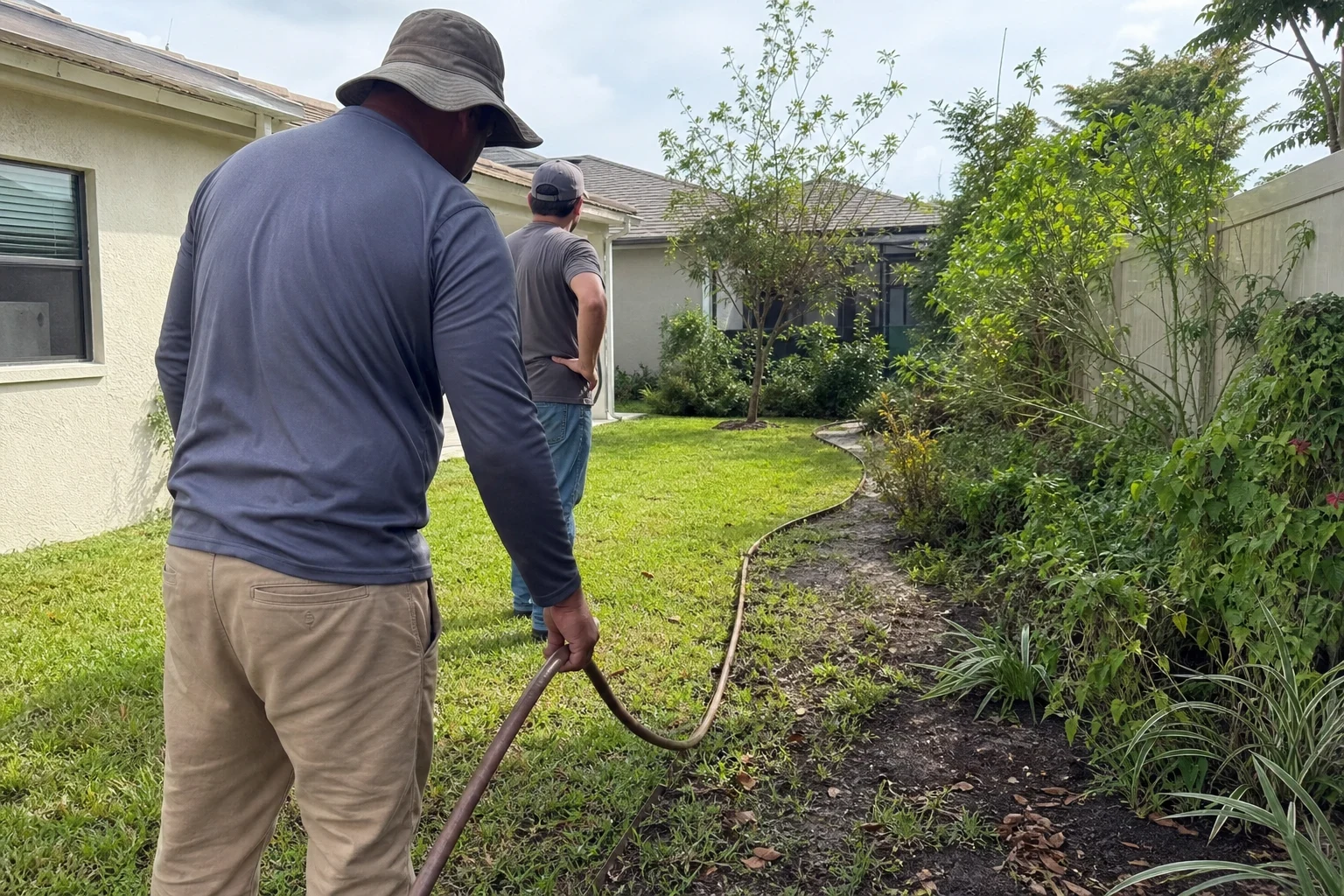
We walk your yard with you, look at each tree and explain what we'd cut and why. If a tree should come down, we say so and tell you what happens if you wait.
- 2
Written estimate
You get a clear estimate listing each tree and the work on it. If your HOA or local rules need approval for a removal, we let you know before scheduling.
- 3
Work day
We set up drop zones, protect plants and hardscape near the work, and keep people and pets clear. Pruning cuts follow the tree's natural branch structure.
- 4
Cleanup and final check
We chip and haul debris and blow off driveways and walks. Before we pack up, we go tree by tree with you so you can look over every cut and ask about anything that catches your eye.
Tree Trimming and Removal Questions
How often should my trees be trimmed?
Most mature shade trees do well with pruning every two to three years. Fast-growing trees or ones near the house may need it more often. We'll suggest a schedule during the walkthrough based on each tree.
When is the best time to trim before storm season?
Late winter through spring is a good window, well before hurricane season begins in June. Thinning and deadwood removal done then reduce the chance of limbs breaking in summer storms. Avoid heavy pruning right before a storm, since fresh cuts don't make a tree stronger overnight.
Do I need a permit to remove a tree?
It depends on the tree, its size and where you live, and many HOAs have their own rules. We'll point out when approval is likely needed so you can sort it out before work starts. We won't schedule a removal that isn't cleared.
Will you top my tree to make it shorter?
No. Topping causes weak, fast regrowth that breaks easily and invites decay. If height is a concern, we use reduction cuts that shorten branches back to a healthy lateral limb.
Do you handle palm trees too?
Yes, but palms grow differently from other trees and need a different approach. Our palm tree pruning and removal service covers frond trimming, seed pod removal and taking down palms safely.
Get a Clear Answer About Your Trees
We'll walk your yard, look at each tree with you and explain the options in plain terms. There's no charge for the visit or the estimate.