ServicesSod Installation
Sod Installation in Lake Buena Vista
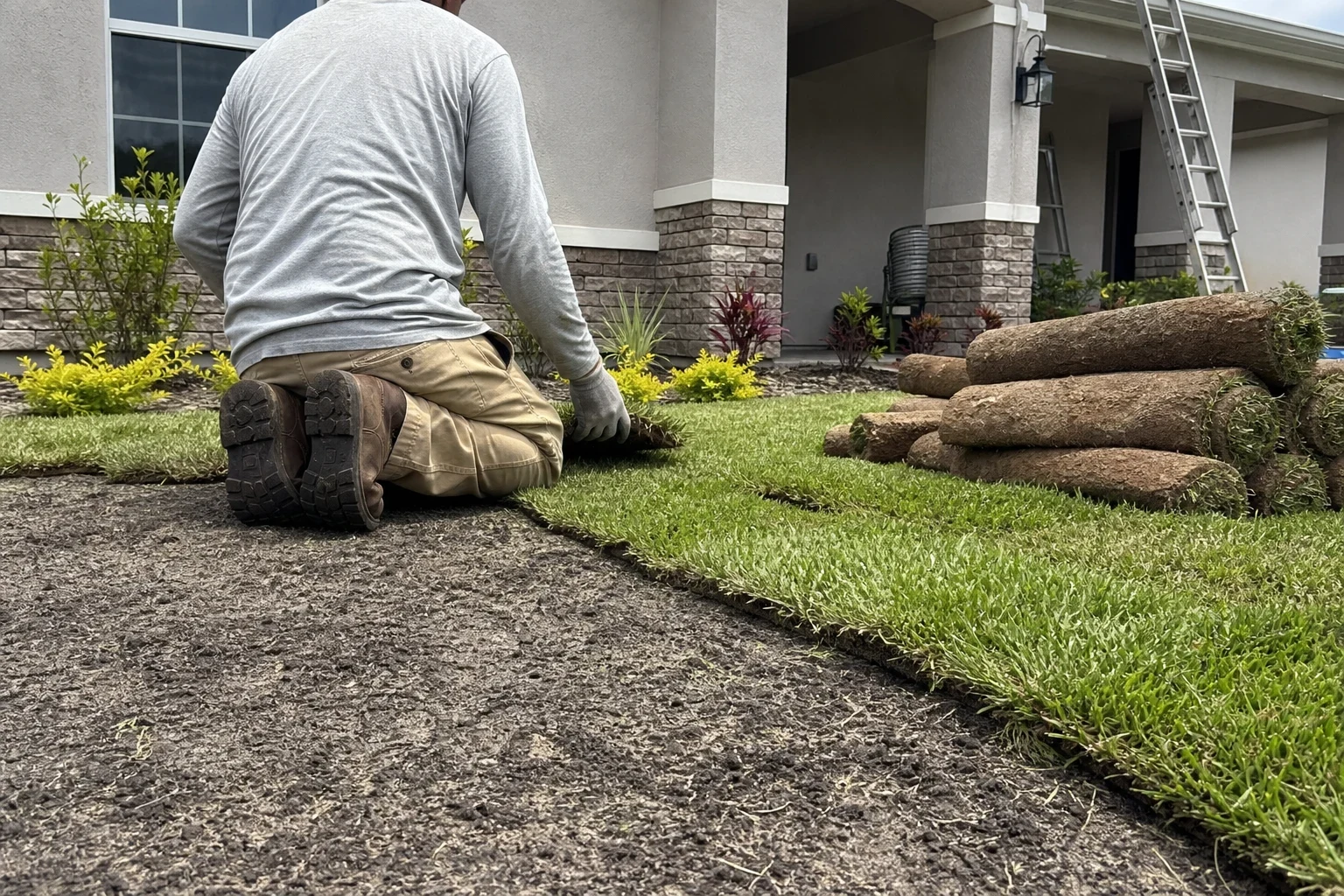
We remove the tired lawn, prepare the soil and lay fresh sod that suits your yard's sun, shade and water. Before any work starts, we walk the property with you and explain each grass option, so you know exactly what you're getting.
When new sod is the right answer
Sod is grass that's already grown. It's cut from a farm in strips, and we lay it on your soil like a living carpet. You get a finished lawn in a day instead of waiting months for seed or plugs to spread and cover the ground. Most of the work happens underneath, though. The grass only does as well as the ground it sits on.
Sod isn't always the fix. If your lawn is thin because the sprinklers miss a corner, or because a fungus is spreading, new grass will fail in the same way. On our walkthrough we look for the cause first. If better lawn care or an irrigation adjustment would solve it, we'll say so. If replacing the turf makes sense, we'll show you which grass fits each part of your yard and why.
What a sod job includes
- Removing the old lawn
- We strip the existing turf and weeds with a sod cutter so the new roots meet bare soil. Laying sod over old grass leaves a spongy layer that dries out and lets weeds push through.
- Grading and soil prep
- We rake and level the ground so water drains away from your home and doesn't pool in low spots. Central Florida's sandy soil drains fast and holds few nutrients, so we work in amendments where the soil needs them.
- Choosing the grass
- St. Augustine handles partial shade and is the common choice here. Zoysia feels denser underfoot and holds up well to foot traffic. Bahia needs less water and fertilizer but looks coarser. We explain the tradeoffs in plain terms and match the grass to your sun, shade and how you use the yard.
- Laying and rolling
- Pieces go down tight with staggered seams, like bricks, so edges don't dry and shrink. We trim neatly around beds, walks and trees, then roll the lawn so the roots make full contact with the soil.
- Sprinkler check and watering plan
- We run your irrigation zones to confirm the new lawn gets even coverage. You get a written watering schedule for the first few weeks, and we explain how to cut back as the roots take hold.
Signs your lawn may need new sod
Bare or thin patches that keep spreading
Patches that grow wider each season, even with regular mowing and feeding, often mean the grass has been weakened past the point of recovery.
Weeds outnumber the grass
Once weeds take over more than half the lawn, treating them can leave you with mostly bare ground. Starting fresh is often quicker and costs less over time.
Brown areas after chinch bugs or fungus
Chinch bugs and gray leaf spot can kill St. Augustine in irregular brown sections. Once the pest or disease is under control, dead areas usually need replacing rather than waiting for them to recover on their own.
The wrong grass for the spot
Grass that fades under a growing oak, or burns along a sunny driveway, may simply be the wrong variety. A different grass in that area can solve a problem that years of care couldn't.
Puddles and uneven ground
Low spots that hold water after summer storms or ruts from foot traffic are best fixed by regrading during a sod install, when the ground is already open.
What affects the price of sod
Sod is priced mainly by area, but the work underneath can matter just as much as the grass itself. Your estimate shows each part so nothing comes as a surprise. For bigger lawn projects, we offer financing of up to $100,000, with terms anywhere from 2 to 12 years and no penalty if you pay it off early.
Square footage
Larger areas need more pallets and more labor. Odd shapes with many curves and beds take longer to cut and fit than a simple rectangle.
Grass variety
Zoysia usually costs more than St. Augustine, and Bahia is often the most economical. We'll show you what each choice means for upkeep as well as upfront cost.
Removal and soil condition
Thick old turf, heavy weed growth, or ground that needs fill and regrading all add time. Soil amendments are added only where the soil actually needs them.
Access to the yard
Narrow side yards, fenced backyards and slopes mean sod and debris are moved by hand or with smaller equipment, which takes longer.
Irrigation fixes
If heads are broken or zones miss parts of the lawn, fixing them before the sod goes down protects your new grass. That work is listed as its own line.
How the job goes, start to finish
- 1
Walkthrough and estimate
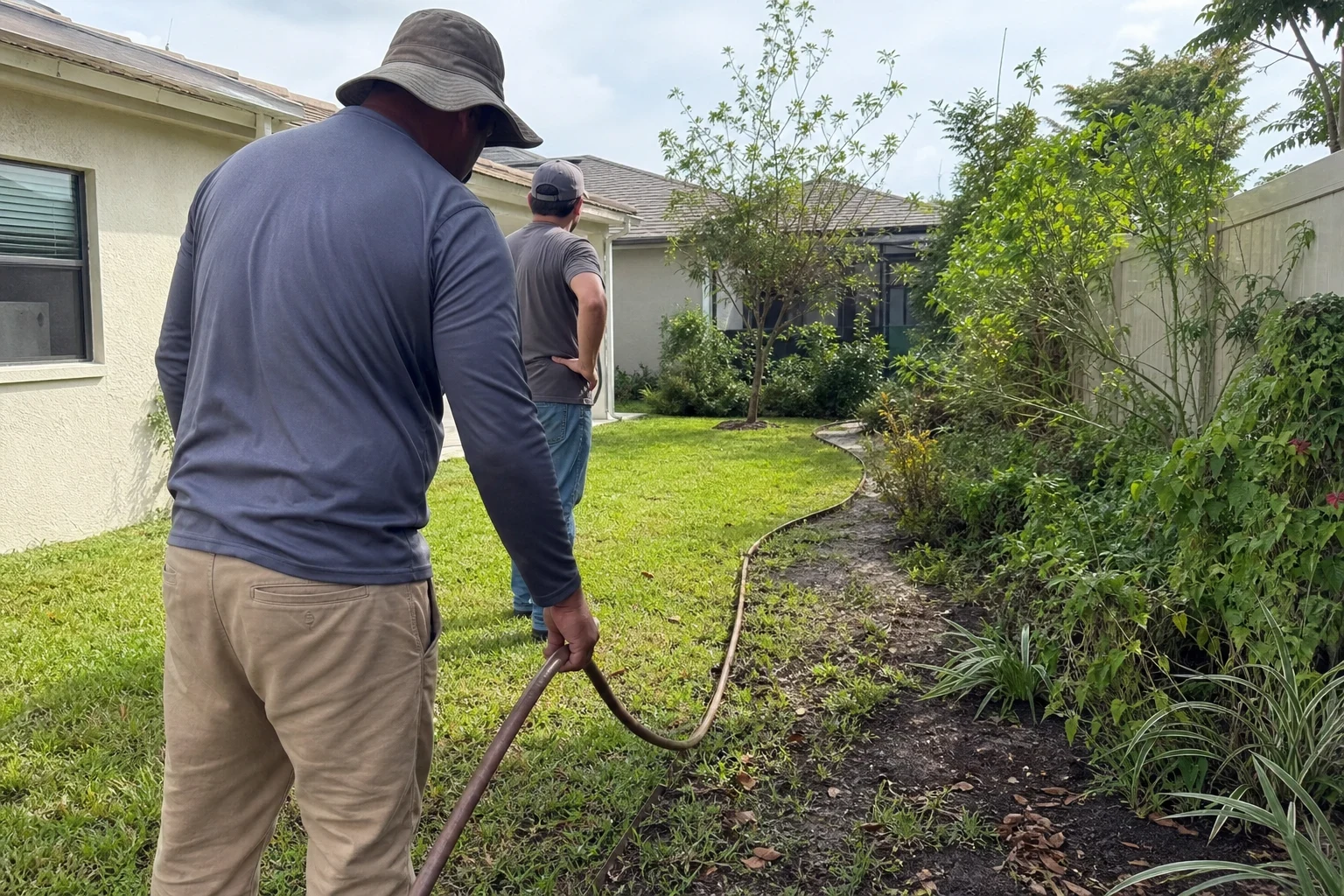
We visit, measure the area and check sun, shade, drainage and your sprinklers. You get a free estimate that lists removal, soil work, grass type and square footage separately, so you can see where the money goes.
- 2
Scheduling the sod
Sod should go down within a day of being cut, so we time the delivery to match the install day. We'll let you know when to expect the crew and ask you to mark any buried lines, pet fences or hidden sprinkler heads you know about.
- 3
Install day
We remove the old lawn, prep and grade the soil, lay the sod and roll it. Most yards are finished in a day or two. We haul away the old turf and clean up walkways and driveways before we leave.
- 4
The first few weeks
New sod needs frequent watering at first, then less as roots grow down. We'll explain when it's safe to mow, usually after a couple of weeks once the pieces won't lift when you tug a corner. If something looks wrong during that time, just give us a call.
Sod installation questions
What's the best time of year to lay sod here?
Warm months are ideal because warm-season grasses root fastest when soil temperatures are high, and summer rains help with watering. Sod can go down year-round in Central Florida, but in the cooler months rooting is slower and you'll need to be more patient before mowing.
How often do I water new sod?
For the first week or two, keep the soil under the sod moist, which usually means short watering sessions more than once a day. After that, water less often but for longer to encourage deeper roots. We'll leave a written schedule and adjust it to your sprinkler system, and we'll note any local watering rules that may allow extra watering for new lawns.
Can you lay sod over my existing grass?
We don't recommend it. Old grass and thatch keep the new roots from reaching the soil, so the sod dries out and weeds come back through. Removing the old lawn first is a big reason a new lawn takes hold.
Which grass works under my trees?
Shade-tolerant St. Augustine varieties do best in partial shade, but no grass thrives in deep shade. If an area gets little sun, we may suggest a bed with mulch and shade plants instead. Our mulch and beds service can handle that at the same time.
Who will be working in my yard?
Our own crew, from a family-owned company. We're business licensed and fully insured, so your property is covered while our people and equipment are on site. We'll tell you who to expect before install day.
See what your new lawn could look like
We'll walk your yard with you, explain the grass options that make sense and give you a free estimate with every step listed. No pressure, just clear answers.